Source Retort Autoclave for Food Canning, Pharma, and Chemical Sterilization
Compare 30 retort autoclave units featuring PLC automation and steam or water heating for food canning, pharmaceutical sterilization, and chemical processing. These machines offer customizable dimensions and high productivity for industrial applications.
Key considerations
Products List
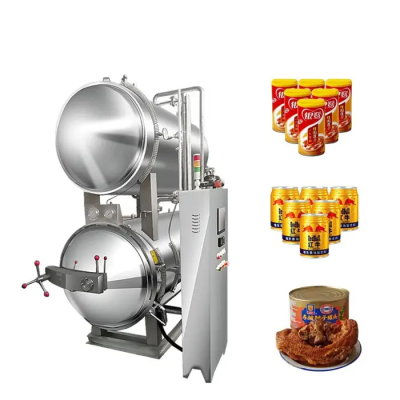


Comprehensive Sourcing Guide
Strategic Sourcing Guide for Retort Autoclave Equipment
Procuring industrial retort autoclaves requires a disciplined approach that balances technical precision with rigorous supplier evaluation. These vessels are critical for thermal processing in food, pharmaceutical, and chemical industries, where the integrity of the sterilization cycle directly impacts product safety and shelf life. The market offers a diverse range of configurations, from compact pilot units to large-scale continuous systems. Buyers must navigate a landscape defined by specific operational parameters, certification requirements, and customization capabilities to ensure the selected equipment aligns with their production goals. This guide outlines the essential factors for sourcing high-performance retort systems based on verified industry data and technical standards.
Technical Specifications and Operational Parameters
The foundation of any retort autoclave selection lies in its technical specifications, which dictate the machine's capacity, efficiency, and suitability for specific products. The core component of modern retort systems is the Programmable Logic Controller (PLC), which ensures precise control over temperature, pressure, and time cycles. These systems are designed for automatic operation, supporting continuous processing modes that enhance productivity. The heating mechanism typically utilizes steam or water immersion, with options for water spray and steam injection to ensure uniform heat distribution.
Capacity is a primary differentiator among available models. The internal diameter of these vessels generally ranges from 1.0 meters to 4.5 meters, with custom configurations available up to 8 meters or more. Similarly, the usable length can extend from 2.0 meters to 15.0 meters, with custom builds reaching lengths of 30 meters or greater. This scalability allows buyers to select equipment that fits their specific production volume, ranging from small pilot plants to large industrial facilities.
Temperature and pressure capabilities are equally critical. Standard commercial retorts often operate at temperatures around 121°C, but advanced models support maximum temperatures up to 500°C. Pressure levels are typically designed to meet specific customer needs, with common operating ranges falling between 0.8 MPa and 6.0 MPa (116 to 870 Psi). Some systems are rated for medium pressure levels, specifically between 1.6 MPa and 10.0 MPa. The heating rate is programmable, typically achieving up to 10°C per minute, while cooling can be managed through forced-air, water spray, or air cooling methods. The opening mechanism, whether side, end, or quick-opening, must be selected based on the specific workflow and product packaging requirements.
Compliance, Certification, and Safety Standards
Navigating the regulatory landscape is a non-negotiable aspect of sourcing retort autoclaves. Equipment intended for food and pharmaceutical applications must adhere to strict international standards to ensure product safety and process validity. Buyers should verify that the supplier provides documentation for relevant certifications, including ISO, FDA, and CE marks. These certifications indicate that the manufacturing process and the final product meet specific quality and safety benchmarks.
The material composition of the vessel is a key compliance factor. Most industrial retorts are constructed from carbon steel, chosen for its durability and ability to withstand high pressures and temperatures. However, the specific grade of steel and the surface treatment must be verified to ensure resistance to corrosion and compatibility with the sterilization medium. The insulation method, whether internal or external, also plays a role in energy efficiency and operator safety, preventing heat loss and protecting personnel from high-temperature surfaces.
When evaluating compliance, buyers must look beyond the presence of a certification label. It is essential to confirm that the specific model being purchased has been tested and certified for the intended application. For instance, a machine certified for general chemical sterilization may not automatically qualify for food-grade applications without additional validation. The "Condition" of the equipment, typically listed as "New," should be confirmed through factory audits or third-party inspections to ensure no hidden defects or prior usage issues exist.
Cost Drivers and Pricing Variables
Understanding the cost structure of retort autoclaves is vital for budget planning and total cost of ownership analysis. The observed price range for these systems is broad, spanning from $50 to $75,000 USD. This significant variance is driven by several factors, including the size of the vessel, the complexity of the control system, and the level of customization required. A small pilot unit with a basic PLC interface will naturally cost significantly less than a large-scale, continuous operation system with advanced touch-screen interfaces and industrial computers.
The Minimum Order Quantity (MOQ) is another critical financial consideration. In the current market, MOQs typically range from 1 to 5 units. For buyers requiring a single unit for a pilot plant or a small production line, the ability to purchase a single item is a significant advantage. However, bulk orders may offer economies of scale, though the specific discount structures are often negotiated on a case-by-case basis.
Additional cost drivers include the heating method and the cooling system. Systems utilizing steam and water immersion may have different operational costs compared to those relying solely on electric heating or air cooling. The choice of insulation and the complexity of the pressure vessel design also impact the final price. Buyers should request a detailed breakdown of costs, separating the base machine price from optional accessories, installation services, and shipping fees. The packaging method, often described as standard packages suitable for container transport, can also influence logistics costs, especially for oversized units.
Typical Applications and Industry Use Cases
Retort autoclaves serve a wide array of industries, with the primary application being the sterilization of canned foods. The "Mini Small Water Immersion Retort Machine" and "Canned Fish Food Autoclave Sterilizer" are examples of equipment specifically designed for the food processing sector. These machines utilize static or water spray principles to ensure that heat penetrates the product uniformly, destroying harmful microorganisms and extending shelf life.
Beyond food processing, these systems are employed in the chemical industry for sterilization and heat treatment of various materials. The "Property" of the machine is often listed as "Chemical Sterilization," indicating its versatility in handling non-food items. The "Usage" category is frequently noted as "Other," suggesting that the equipment can be adapted for specialized industrial processes beyond standard canning.
The scale of operation is another determinant of application. Systems are available in "Medium" scale configurations, suitable for small to medium-sized production facilities. For larger operations, the continuous operation mode allows for high productivity, making these machines ideal for high-volume manufacturing environments. The "Key Selling Points" often highlight "High Productivity" and "High Efficiency," which are critical for maintaining competitive margins in mass production scenarios.
Supplier Evaluation and Vendor Selection
Selecting the right supplier is as important as selecting the right machine. Buyers should prioritize suppliers who demonstrate a clear understanding of the specific requirements of their industry. The "Place of Origin" for many retort autoclaves is China, a major manufacturing hub for industrial machinery. However, the location of the supplier does not guarantee quality; buyers must evaluate the supplier's track record, technical support capabilities, and after-sales service.
Key evaluation criteria include the supplier's ability to provide customization. The "Customization" attribute is listed as "Available," meaning that buyers can request modifications to the standard design to fit their unique production needs. This includes customizing the internal diameter, usable length, and specific pressure levels. The supplier should also be able to provide a detailed "Delivery" timeline, which typically ranges from 30 to 35 working days. This lead time is crucial for production planning and should be factored into the overall procurement schedule.
Buyers should also assess the supplier's commitment to quality. The "Condition" of the equipment should be verified as "New," and the supplier should provide evidence of their manufacturing processes. The "Bearing Capacity" and "Maximum Load Capacity" of the vessel are technical details that should be clearly documented. Additionally, the supplier's ability to provide "Standard Packages as Container" for shipping is essential to ensure the safe transport of large, heavy machinery.
Quality Control and Long-Term Procurement Considerations
Ensuring the long-term reliability of retort autoclaves requires a robust quality control strategy. Buyers should implement a rigorous inspection process before accepting delivery. This includes verifying the "Maximum Temperature" and "Maximum Pressure" ratings against the actual performance of the machine. The "Heating Rate" and "Cooling Rate" should be tested to ensure they meet the programmable specifications. The "Opening Method" and "Insulation Method" should also be inspected to confirm they function as intended and meet safety standards.
Long-term procurement considerations extend beyond the initial purchase. The "Warranty" period is a critical factor, with standard offerings typically covering 1 Year. Buyers should negotiate extended warranty terms if possible, especially for high-value equipment. The availability of spare parts and the supplier's ability to provide technical support are also essential for minimizing downtime. The "Color" of the machine is often customizable, but this should not be the primary focus; instead, the focus should remain on the functional integrity and durability of the equipment.
Finally, buyers should consider the energy efficiency of the retort system. The "Energy" type, often listed as "Heat Sterilization," should be optimized to reduce operational costs. The "Efficiency" of the machine, described as "High Efficiency Retort Machine," should be validated through performance testing. By focusing on these long-term factors, buyers can ensure that their investment in retort autoclaves delivers sustained value and supports their production goals for years to come.
Comparative Analysis of Retort Configurations
To assist in decision-making, the following table compares key attributes of different retort configurations based on available data. This comparison highlights the variability in specifications and helps buyers identify the most suitable option for their specific needs.
| Feature | Pilot/Small Scale | Medium Industrial Scale | Large Custom Scale |
|---|---|---|---|
| Typical Model | DN0510, DN0920 | DN1236, DN1260 | Custom (up to 8m+ ID) |
| Internal Diameter | ~1.0m | 1.0m - 4.5m | Custom up to 8m+ |
| Usable Length | ~2.0m | 2.0m - 15.0m | Custom up to 30m+ |
| Max Temperature | 121°C (Commercial) | Up to 500°C | Up to 500°C |
| Max Pressure | 0.8 - 6.0 MPa | 1.6 - 10.0 MPa | Custom Design |
| Operation Mode | Batch/Static | Continuous | Continuous |
| Control System | PLC + Touch Screen | PLC + Industrial PC | PLC + Industrial PC |
| Certification | ISO, CE, FDA | ISO, CE, FDA | ISO, CE, FDA |
| Lead Time | 30-35 Working Days | 30-35 Working Days | 30-35 Working Days |
This table illustrates that while the core technology remains consistent, the scale and customization options vary significantly. Buyers should use this data to align their procurement strategy with their production capacity and specific processing requirements. By carefully evaluating these factors, buyers can secure a retort autoclave that meets their technical, financial, and operational needs.
FAQs
What is the core component of a retort autoclave?
The core component is a PLC for precise control. Modern systems use this to manage temperature, pressure, and time cycles automatically for consistent sterilization results in food and chemical applications.
Can I customize the size of the retort vessel?
Yes, customization is available for dimensions. Internal diameter ranges from 1.0m to 4.5m with custom options up to 8m, while usable length extends from 2.0m to 15m with custom builds reaching 30m.
What certifications are typically required for these machines?
Certifications often include ISO, FDA, and CE marks. These indicate compliance with quality and safety benchmarks for food and pharmaceutical applications, ensuring the equipment meets international regulatory standards.
How long is the delivery lead time for new units?
The delivery time is typically 30 to 35 working days. This lead time applies to new units and should be factored into production planning schedules for procurement and installation.
What is the maximum operating temperature for advanced models?
Advanced models support maximum temperatures up to 500°C. Standard commercial units often operate around 121°C, but programmable heating rates allow for higher thermal processing needs.
Is the minimum order quantity flexible for pilot plants?
Yes, the minimum order quantity can be as low as one unit. This flexibility supports pilot plant setups and small production lines without requiring bulk purchases of multiple machines.